
Technological University Dublin (TU Dublin), through Construction Cluster Ireland, is playing a key role in a €5.1 million European research project aimed at transforming public spaces through innovative, sustainable and inclusive street furniture.
The four-year CANVAS project, funded by the European Union’s Horizon Europe programme, brings together 18 partner organisations from 10 countries to rethink how everyday public amenities, including benches, lighting, shelters and other street furniture, can improve the quality of shared spaces and respond to the needs of local communities.
Construction Cluster Ireland, Ireland’s national cluster for the construction sector, is hosted by TU Dublin and is leading the project’s industry and innovation dimension in the Irish context.
The University’s involvement is led by Principal Investigators Dr Oluwasegun Seriki and Ruairi Hayden, supported by Paul Olufemi, the Cluster’s newly appointed Research Assistant/Cluster Support Officer.
Ireland will have a direct role in the project through Longford County Council, which is participating as one of CANVAS’s European pilot partners. This will provide an opportunity to explore how innovative approaches to public space design can be applied in an Irish setting, working with local stakeholders and communities to identify solutions that reflect local needs and identity.
Across Europe, many public spaces face challenges including ageing infrastructure, poor accessibility, insufficient public amenities and concerns around safety and comfort.
CANVAS aims to address these issues by moving beyond the traditional view of street furniture as purely functional infrastructure and recognising its potential to create more welcoming, attractive and sustainable places.
Speaking about the project, Dr Dympna O’Sullivan, Director of Research, Innovation and External Engagement, said:
“CANVAS is an excellent example of how TU Dublin is bringing together research expertise, industry partnerships and local communities to address real-world challenges. Through Construction Cluster Ireland, we are helping to translate European research and innovation into practical solutions that will make our public spaces more sustainable, inclusive and welcoming, both here in Ireland and across Europe.”
Guided by New European Bauhaus principles, the project will focus on five themes: safety and comfort; art and cultural identity; environmental performance; inclusion; and social interaction and multifunctionality.
Across its eight European pilot locations, CANVAS will develop and test 21 solutions and seven innovative street furniture design models.
These will explore approaches including circular materials, nature-based shading and planting, accessible design, improved lighting and low-maintenance solutions that respond to local heritage and climate conditions.
Communities, local authorities, designers and businesses will take part in co-creation activities, ensuring the solutions developed are shaped by the people who use these public spaces.
For Construction Cluster Ireland, participation in CANVAS represents an important opportunity to strengthen links between Irish construction businesses, academic research and European innovation networks.
Drawing on its national industry network, the Cluster will help translate research and design developments into practical solutions with the potential to be adopted across Ireland’s built environment.
The project will also develop practical guidance and tools to support local authorities in areas such as sustainable public procurement, material selection, community participation and climate adaptation.
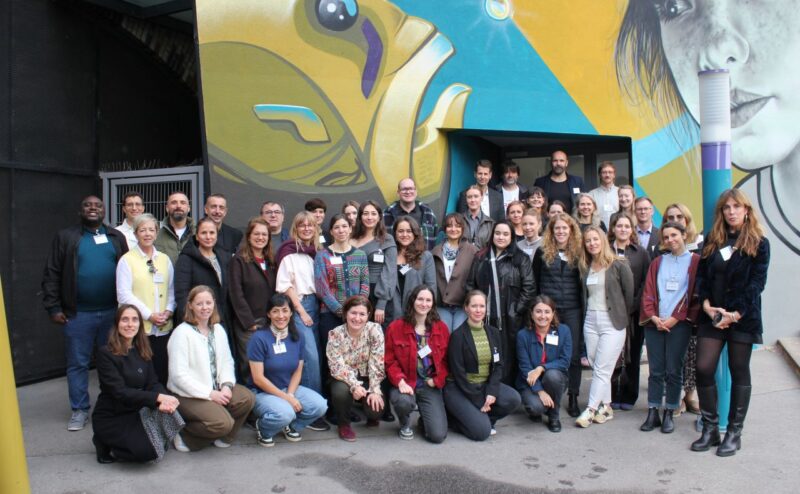
The CANVAS project was officially launched at a kick-off meeting in Vienna from October 14–16, 2026, and will run until August 2030.
Through its involvement, TU Dublin continues to strengthen its contribution to European research and innovation, supporting a more sustainable, inclusive and community-centred approach to the design and development of public spaces in Ireland.